Flood Cleanup in West Yarmouth, MA
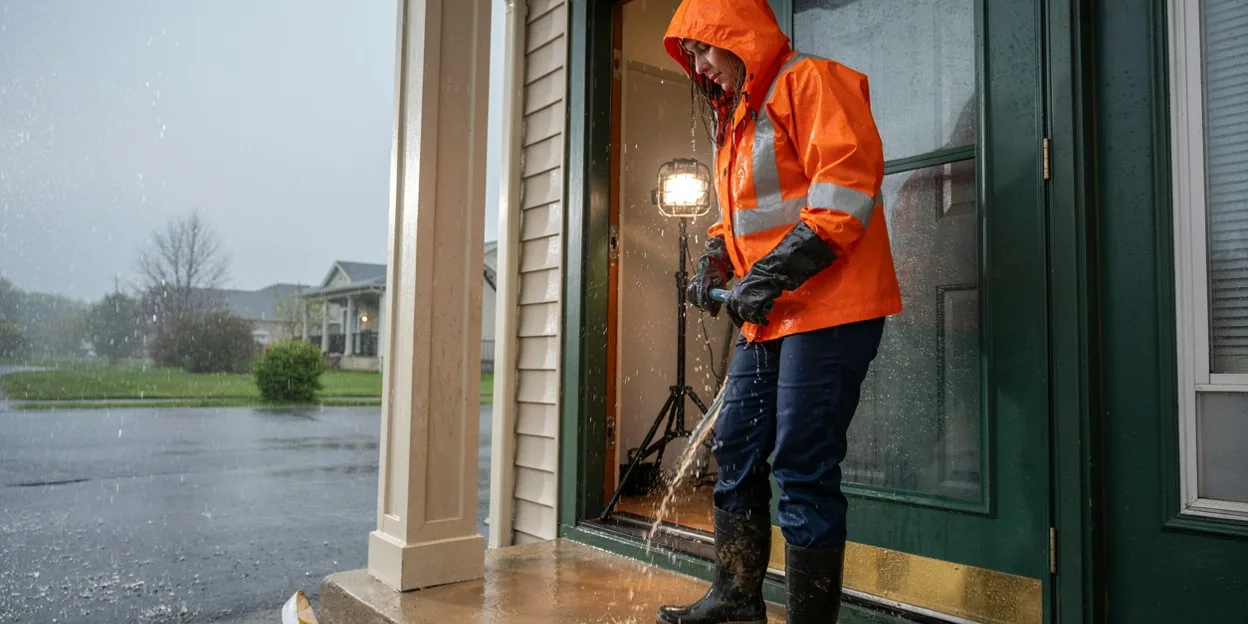
The nor'easter hit at high tide. By morning Lewis Bay had come across the road, through the yard, and into the first floor of your West Yarmouth cottage, and it left sand and seaweed in the living room when it went back out. We put you on the phone with an independent local provider who does flood cleanup in Yarmouth and across Barnstable County.
What the crew does first
Salt water off the bay and runoff off Route 28 are treated as contaminated water. They have been through parking lots, septic leach fields, and boatyards, and they carry sand, fuel, and whatever the tide picked up. The crew works in protective gear and sets up containment between the wet rooms and the dry ones.
They pump out the standing water, shovel out the sand and silt, and remove carpet, pad, and drywall up to a line above where the water reached. Salt is the extra problem. It stays in framing and concrete after the water is gone and keeps pulling moisture out of the air, so the crew rinses hard surfaces before disinfecting them. Then air movers and dehumidifiers run until a moisture meter says the framing and floor are dry.
What to do in the next hour
Do not walk into water that has reached outlets, the furnace, or the electrical panel. If the panel is dry and you can reach it safely, shut off power to the flooded rooms. Do not run the heat or a window unit until someone has checked the ducts and the equipment.
Photograph every room, the water line on the wall, and the outside of the house before you touch anything. Keep receipts for anything you buy. Move what you can lift to a dry room or out to the driveway. Then make the call.
What is usually saved and what is not
Anything porous that sat in salt water is usually removed. That means carpet and pad, laminate, particleboard cabinets, upholstered furniture, mattresses, and drywall and insulation below the water line. Books and paper are rarely worth the effort.
Concrete, tile, metal, and solid wood can be rinsed, cleaned, and disinfected. Pine floors are a case-by-case call and salt makes it harder. Ask the crew to photograph removed items before they leave and to give you a written list. Rugs, furniture, and keepsakes that might be saved are handled as content restoration. Once the contaminated material is out, structural drying finishes the job.
Barnstable County notes
The Cape floods from the sea, not from rivers. The nor'easter of January 4, 2018 arrived on a high astronomical tide and put water over Route 28 and Route 6A in Yarmouth and Dennis, four feet deep on Morris Island in Chatham, and three feet deep on Commercial Street in Provincetown. Hurricane Bob on August 19, 1991 drove a surge of twelve to fifteen feet into Onset, Wareham, and Mashpee at the head of Buzzards Bay. The March 2018 nor'easters and the storms of December 2023 and January 2024 flooded Provincetown's East End again.
The low ground repeats. Lewis Bay and Hyannis Harbor in West Yarmouth and Hyannis, the mouths of Bass River and Parkers River, the Nantucket Sound shore from Dennis Port to Harwich Port, and the Cape Cod Bay shore in Provincetown and Truro. Motels and condominium buildings along Route 28 sit on some of the lowest lots in Yarmouth. Tell the crew if your building has more than one unit, and notify the association in writing.
Standard homeowner policies generally do not cover water that came from outside. Flood coverage is a separate policy, usually through the National Flood Insurance Program, and many Cape homes near the water carry it. Ask the crew to photograph the water line and log the readings for whichever adjuster you deal with. If a storm also lifted shingles and let rain in from above, that part is roof leak water damage.
Calling about flood cleanup
Say how deep the water got, whether it is still coming in, and whether sand or seaweed came in with it. Say whether the power is on, whether the house has a basement or a crawl space, and whether the septic system or yard flooded. Mention if you have been told to stay out. Call (508) 419-9161 now and tell us what you see.